
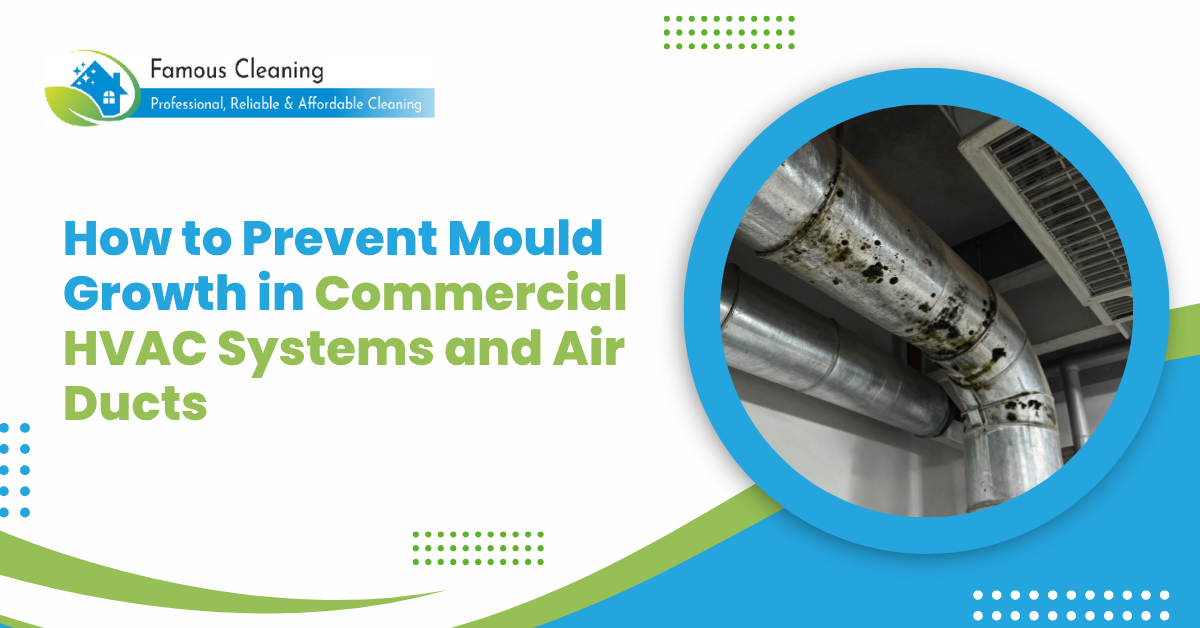
How to Prevent Mould Growth in Commercial HVAC Systems and Air Ducts
17 June, 2026 | Famous Claning
Mould in a commercial HVAC system does not stay in one place. The ventilation network carries spores into every room the system serves, so prevention protects both the building and the people who work in it. The good news is that mould needs moisture to grow, and moisture is something a well-run maintenance plan can control. This guide sets out the practical steps facility managers and building owners can take to keep air-handling units and ducts free of mould.
Why mould grows in HVAC systems and ducts
Mould spores are always present in the air. They only take hold when they land somewhere warm, damp and dark, and an HVAC system can provide all three. Cooling coils produce condensation, drain pans hold water, and settled dust gives the spores something to feed on. According to the US Environmental Protection Agency, the most effective way to keep mould out of air ducts is to control the moisture that feeds it. Once mould establishes inside the ventilation system, it can spread through the whole building, which is why prevention matters more than cleaning up after the fact.
Control moisture and humidity first
Humidity control is the single most important step. The EPA advises keeping indoor relative humidity below 60 percent, and ideally between 30 and 50 percent. Above 60 percent, condensation can form on cold surfaces and mould can grow even without a leak. Use dehumidification during humid periods, and check levels with a humidity meter so you are working from readings rather than guesswork.
Keep drain pans and condensate lines clear
Condensate drain pans are a common trouble spot. If a pan is not sloped correctly or the drain line is blocked, water sits in the pan and becomes a reservoir for mould and bacteria. Inspect drain pans regularly for standing water, and flush the condensate line so it drains freely. A blocked line that backs up into the pan is one of the most frequent causes of mould in air-handling units.
Seal and insulate the ductwork
Two overlooked sources of moisture are duct leaks and condensation. Seal leaks with mastic or proper metal tape rather than standard duct tape, which breaks down over time. Insulate ducts that run through warm or unconditioned spaces so condensation does not form on cold duct surfaces. One point worth knowing: the EPA notes that internal duct lining which has become wet or mouldy cannot be cleaned effectively and should be removed and replaced, as there is no approved biocide for lined ductwork.
Change filters and keep coils clean
Dirty or damp air filters trap fewer spores and can harbour growth, so replace them on a set schedule, more often in busy or dusty buildings. Have evaporator coils and air-handling units cleaned as part of routine servicing, since the coil is usually damp during cooling and is a prime spot for mould to start.
Schedule regular inspections and maintenance
Routine inspection and servicing catches small problems before they spread. In Australia, AS/NZS 3666 sets out the requirements for microbial control in the air-handling and water systems of buildings, and it is a sound benchmark to build a commercial maintenance plan around. Keep written records of inspections and cleaning. For a commercial building, there is also a duty of care to provide healthy indoor air for staff and visitors, so a documented maintenance program protects the business as well as the occupants.
When to call a professional
Some signs mean the system needs a professional assessment rather than a quick wipe of a vent cover:
- A musty or earthy smell coming from the vents when the system runs.
- Visible growth on grilles, diffusers, or inside the ductwork.
- Occupants reporting allergy or respiratory symptoms that ease when they leave the building.
For visible mould in the building and a thorough clean-down, our mould removal and commercial cleaning teams can help, and a follow-up sanitisation and disinfection service reduces the spore and dust load in the space. For the duct system itself, use a qualified HVAC or duct-cleaning specialist, and make sure the underlying moisture problem is fixed so the mould does not return.
Frequently asked questions
How often should a commercial HVAC system be inspected for mould?
Make it part of a scheduled maintenance program, commonly from quarterly to annually depending on the system, the climate, and how the building is used. High-humidity sites, and settings such as healthcare or food premises, need more frequent checks.
Can mould in air ducts affect health?
It can. Exposure to mould can trigger or worsen allergies and respiratory symptoms in some people, and those with asthma or weakened immunity tend to be more affected. If occupants report symptoms that improve away from the building, have the system assessed, and encourage anyone with ongoing symptoms to see a doctor.
Does duct cleaning prevent mould?
Cleaning removes existing growth and debris, but it does not stop mould returning on its own. Unless the moisture source is fixed, the mould comes back. Moisture control is the real prevention, and cleaning is part of the response when growth is already present.
What humidity level helps prevent mould?
Keep indoor relative humidity below 60 percent, and ideally between 30 and 50 percent. Above 60 percent, the risk of condensation and mould rises sharply.
Preventing mould in commercial HVAC systems comes down to controlling moisture and keeping to a regular maintenance schedule. If your building has visible mould or needs a thorough clean, our team offers mould removal and commercial cleaning across Adelaide, and can work alongside your HVAC provider to keep the space healthy.