
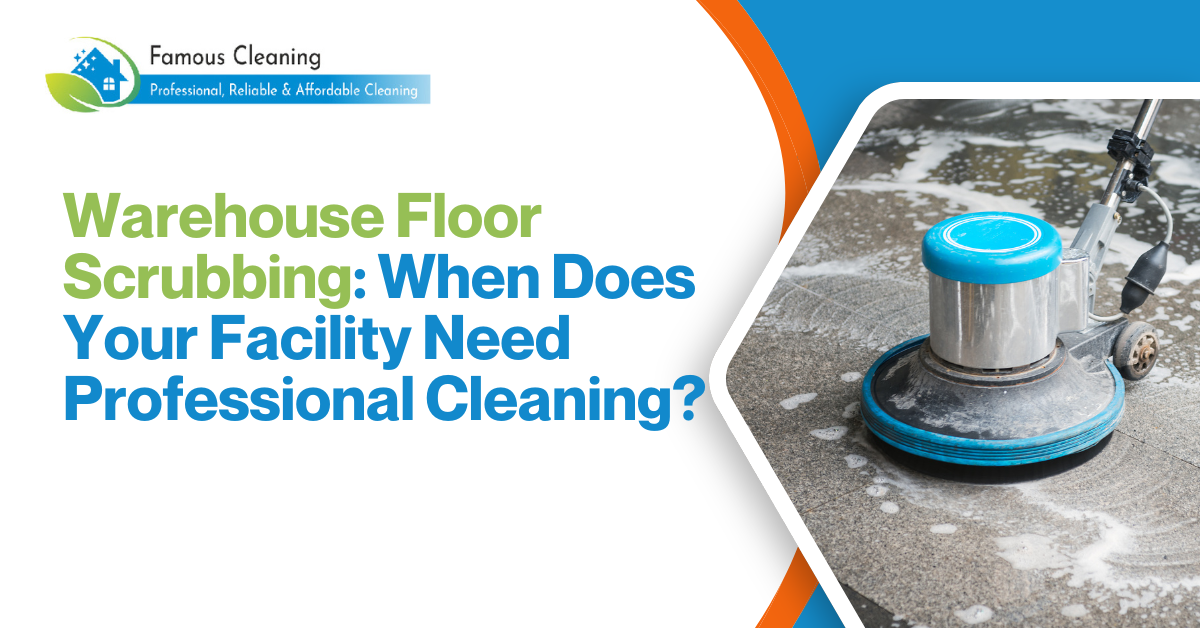
Warehouse Floor Scrubbing: When Does Your Facility Need Professional Cleaning?
1 April, 2026 | Famous Cleaning
Warehouse floor scrubbing is the machine-based cleaning of warehouse floors to remove compacted dirt, dust, tyre marks, oil residue, grease, stains and surface build-up. A facility usually needs professional floor scrubbing when regular sweeping or mopping no longer keeps the floor clean, safe or presentable.
For Adelaide warehouses, floor scrubbing is common in distribution centres, industrial facilities, retail stockrooms, food storage areas, manufacturing sites, logistics hubs and commercial storage spaces. These sites often have forklift traffic, pallet movement, concrete flooring, dust build-up and delivery zones that need more than basic cleaning.
Safe Work Australia states that workplaces should keep floors clean and tidy, use cleaning schedules and dry floors after cleaning to help reduce slip, trip and fall risks. This makes warehouse floor cleaning part of workplace risk management, not only a visual maintenance task.
What is warehouse floor scrubbing?
Warehouse floor scrubbing is a deeper floor cleaning method that uses a floor scrubber machine, suitable cleaning solution and controlled water recovery to clean large hard-floor areas.
A floor scrubber usually performs three actions:
- Applies water and cleaning solution to the floor
- Scrubs the surface with brushes or pads
- Recovers dirty water from the floor
This method is more effective than manual mopping for large warehouse areas because it can clean wide floor spaces consistently and remove dirt that sits inside uneven or porous surfaces.
Warehouse floor scrubbing is commonly used on:
- Sealed concrete floors
- Epoxy-coated floors
- Polished concrete floors
- Vinyl industrial floors
- Painted warehouse floors
- Loading dock floors
- Workshop and production floors
The cleaning method should match the floor surface. For example, harsh chemicals or abrasive pads can damage some coated or polished floors.
When does your facility need professional warehouse floor scrubbing?
Your facility needs professional warehouse floor scrubbing when visible dirt, stains, dust or residue remain after routine cleaning.
The signs below help site managers decide when basic cleaning is no longer enough.
1. The floor looks dirty even after sweeping
Sweeping removes loose dust, cardboard fibres, pallet fragments and surface debris. It does not remove compacted dirt, tyre residue, oil film or embedded grime.
You may need floor scrubbing if:
- The floor still looks grey or dull after sweeping
- Dirt marks return quickly after cleaning
- Dust settles again within a short time
- Corners and traffic lanes look darker than other areas
- Staff notice dirt transferring onto shoes, stock or equipment
This is common in warehouses with open roller doors, concrete floors, frequent deliveries and pallet movement.
2. Forklift tyre marks are visible
Forklifts and pallet jacks can leave tyre marks in traffic lanes, turning points, dispatch areas and loading docks. These marks are often difficult to remove with a broom or mop.
Professional floor scrubbing may be needed when:
- Black tyre marks appear across main travel paths
- Turning zones have dark circular marks
- Loading dock areas look heavily marked
- Manual cleaning does not remove the stains
- The floor looks unclean during client or supplier visits
Tyre marks do not always mean the floor is unsafe, but they can affect presentation and make cleaning harder over time.
3. Dust keeps returning
Warehouse dust can come from cardboard, concrete, timber pallets, packaging, outdoor dirt and product handling. Sweeping can move fine dust into the air if the method does not control it.
A professional cleaning plan can help when:
- Dust settles on stock, racks and equipment
- Staff complain about dusty work areas
- Dust appears again soon after sweeping
- Product packaging looks dirty before dispatch
- Fine dust builds up around racking and floor edges
Safe Work Australia’s guidance on managing the work environment covers physical workplace conditions, including floors, workspaces, ventilation and facilities. These areas need regular attention because workplace conditions can affect health and safety.
4. The floor has oil, grease or chemical residue
Warehouses that use forklifts, machinery, loading equipment or maintenance areas may have oil or grease marks. These residues need correct handling because they can create slip risks and may spread across the floor if cleaned incorrectly.
You may need professional cleaning if:
- Oil marks appear near machinery or equipment
- Grease builds up in workshop zones
- Spills leave a film after cleaning
- Staff place warning signs in the same area repeatedly
- Forklift paths feel slippery or sticky
Chemical spills need extra care. Cleaning staff should identify the substance, follow site safety procedures and use the correct product safety data sheet where applicable.
EPA South Australia lists waste codes for several waste types, including alkaline cleaners, caustic soda and ammonium hydroxide. This is relevant when a site handles cleaning chemicals, chemical residues or industrial waste that cannot be treated as normal rubbish.
5. Walkways and work zones look poorly maintained
A warehouse floor often has marked walkways, pedestrian areas, forklift lanes, dispatch zones and storage bays. Dirt and stains can reduce the visibility of these areas.
Professional floor scrubbing can help when:
- Line markings are hard to see
- Walkways look dusty or stained
- Staff areas near warehouse entry points look dirty
- Delivery areas have heavy dirt build-up
- Visitors notice poor floor presentation
Clean floors make it easier for staff to identify spills, debris, damaged surfaces and blocked access points.
6. The warehouse is preparing for an audit, inspection or client visit
Many warehouses schedule floor scrubbing before a site audit, lease inspection, client visit, safety review, stocktake or major supplier inspection.
This is useful when:
- The warehouse needs to meet internal presentation standards
- A landlord or property manager is reviewing the site
- A client is inspecting storage or dispatch areas
- A compliance or safety audit is planned
- The business wants to reset cleaning standards after a busy period
Floor scrubbing should be scheduled before the visit date, not on the same day, so the floor has enough time to dry and the site can be reviewed afterward.
7. Staff spend too much time cleaning the floor manually
Internal staff may handle minor spills and daily housekeeping, but large floor areas need suitable equipment. Manual cleaning can be slow, inconsistent and disruptive.
Professional floor scrubbing is worth considering when:
- Staff spend hours sweeping or mopping
- Cleaning interrupts warehouse operations
- The site does not own suitable floor equipment
- Cleaning quality changes depending on who does the task
- The warehouse has large open floor areas
A cleaning provider can schedule floor scrubbing outside operating hours or during low-traffic periods, depending on site access.
8. The facility has high forklift or pallet traffic
High-traffic warehouses need more frequent floor maintenance. Forklifts, pallet jacks, trolleys and delivery equipment move dirt across the floor and create wear in repeated traffic lanes.
Your facility may need regular floor scrubbing if it has:
- Daily forklift movement
- Heavy dispatch activity
- Frequent loading and unloading
- High pallet turnover
- Outdoor-to-indoor traffic
- Large delivery vehicle access points
The busiest zones should be cleaned more often than low-use storage areas.
9. The floor has odour or sticky residue
Odour can come from spills, waste areas, moisture, food handling, product leakage or cleaning residue. Sticky floors can also collect more dust and dirt.
Professional floor scrubbing may help when:
- The floor feels sticky after cleaning
- Odour comes from one area repeatedly
- Waste or spill zones smell after basic cleaning
- Food, drink or product residue has dried on the surface
- Cleaning chemicals have left residue behind
The source of the odour should be identified first. Scrubbing the floor without removing the cause may only give a short-term result.
10. The warehouse has not had a deep floor clean for months
Even well-managed warehouses need periodic deep cleaning. Daily sweeping controls loose debris, but it does not remove long-term build-up.
A deep floor scrub may be needed after:
- Peak trading periods
- End-of-year stock movement
- Renovation or fit-out work
- Water leaks or flooding
- Pest treatment
- Machinery movement
- Large stock relocation
- Long periods without professional cleaning
A planned deep clean is usually easier and less disruptive than waiting until the floor condition affects daily operations.
What does professional warehouse floor scrubbing include?
Professional warehouse floor scrubbing usually includes inspection, debris removal, machine scrubbing, stain treatment, water recovery and final checks.
A typical process includes:
- Site inspection
The cleaner checks the floor type, traffic areas, stains, access points, hazards and restricted zones. - Loose debris removal
Dust, packaging waste, pallet fragments and loose dirt are removed before machine scrubbing. - Spot treatment
Oil, grease, tyre marks or heavy stains are treated with suitable cleaning products. - Machine scrubbing
A floor scrubber cleans the floor using the correct brush, pad and solution for the surface. - Dirty water recovery
The machine collects dirty water to reduce drying time and avoid spreading residue. - Edge and corner cleaning
Areas near walls, racking and equipment may need hand detailing because machines cannot always reach them. - Drying and safety check
Wet areas should be marked, and floors should be dried before regular traffic resumes. Safe Work Australia specifically advises drying floors after cleaning as part of slip and trip prevention. - Final review
The site manager and cleaning team can check high-traffic areas, marks and problem zones after cleaning.
Areas that usually need more frequent floor scrubbing
Some parts of a warehouse collect more dirt than others.
High-priority areas include:
- Loading docks
- Dispatch zones
- Receiving areas
- Forklift traffic lanes
- Pallet wrapping areas
- Waste collection zones
- Workshop or maintenance areas
- Entry points near roller doors
- Staff walkways
- Areas near floor drains
- Stock movement zones
- Customer or visitor access areas
Low-traffic storage corners may not need the same cleaning frequency as loading areas. A zone-based plan helps control cost and keeps cleaning focused where it is needed.
What should you check before booking warehouse floor scrubbing?
Before booking a floor scrubbing service, collect the details that affect scope, timing and price.
Prepare this information:
- Warehouse location
- Approximate floor area
- Floor type
- Main floor issues
- Photos of stains or tyre marks
- Forklift operating hours
- Access times
- Loading dock availability
- Water access
- Power access, if needed
- Wastewater handling requirements
- Restricted zones
- Required safety documents
- Preferred cleaning frequency
This helps the cleaning provider recommend the right equipment, staff numbers and schedule.
Can floor scrubbing damage warehouse floors?
Floor scrubbing can damage a warehouse floor if the wrong brush, pad, chemical or pressure setting is used.
Risk is higher when:
- The floor has a coating or sealant
- The floor is polished concrete
- The floor has old paint
- The cleaner uses harsh chemicals
- The machine uses an abrasive pad
- The floor has cracks or loose surface material
- Stains are treated without checking the surface
A professional cleaner should inspect the floor before scrubbing and choose a method that matches the surface condition.
Warehouse floor scrubbing checklist for facility managers
Use this checklist to decide whether your facility needs professional cleaning.
Floor condition
- Does the floor look dirty after sweeping?
- Are forklift tyre marks visible?
- Are oil, grease or product stains present?
- Are walkways hard to identify?
- Is dust settling on stock or equipment?
- Does the floor feel sticky or slippery?
Safety and operations
- Are spills happening in the same areas?
- Are staff using warning signs often?
- Are loading docks heavily marked?
- Are forklift paths dirty?
- Are emergency paths clear and clean?
- Is cleaning disrupting operations?
Timing and site needs
- Is an audit or inspection coming up?
- Has the warehouse had a busy trading period?
- Has the floor not been scrubbed for several months?
- Is the warehouse preparing for new stock?
- Is the business moving in or moving out?
- Does the site need after-hours cleaning?
If several answers are “yes,” the facility likely needs professional warehouse floor scrubbing.
Questions to ask a warehouse floor cleaning provider
Before hiring a cleaning provider, ask practical questions about method, safety and scope.
Useful questions include:
- What type of floor scrubber will you use?
- Will you inspect the floor before cleaning?
- Can you clean outside business hours?
- How do you handle oil, grease or chemical residue?
- Do you clean loading docks and traffic lanes?
- How long will the floor take to dry?
- What areas are not included in the quote?
- Can you provide a regular cleaning schedule?
- Do you have insurance?
- Will you use chemicals suitable for the floor type?
Clear answers help prevent confusion and reduce the risk of damage or missed areas.
A warehouse needs professional floor scrubbing when sweeping and mopping no longer remove dirt, dust, tyre marks, oil residue or floor build-up. The most common signs are dirty traffic lanes, visible forklift marks, recurring dust, sticky floors, loading dock grime and poor presentation before audits or client visits.
For Adelaide facilities, the best approach is to use daily cleaning for loose debris and scheduled floor scrubbing for deeper cleaning. Site managers should review the floor condition, identify high-traffic zones and set a cleaning frequency based on warehouse use, not guesswork.
FAQs about warehouse floor scrubbing
What is warehouse floor scrubbing?
Warehouse floor scrubbing is machine-based cleaning for large hard-floor areas. It removes dirt, dust, tyre marks, stains and residue that regular sweeping or mopping may leave behind.
How do I know if my warehouse floor needs scrubbing?
Your warehouse floor may need scrubbing if it still looks dirty after sweeping, has forklift tyre marks, feels sticky, has oil stains or collects dust quickly after cleaning.
How often should warehouse floors be scrubbed?
Low-traffic warehouses may need monthly or quarterly scrubbing. Busy distribution centres, industrial sites and warehouses with heavy forklift traffic may need weekly or fortnightly scrubbing.
Can floor scrubbing remove forklift tyre marks?
Floor scrubbing can remove or reduce many forklift tyre marks, depending on the floor surface, tyre type, stain age and cleaning method. Older or deeper marks may need spot treatment.
Is warehouse floor scrubbing safe during business hours?
It can be done during business hours if the area is isolated and traffic is controlled. Many warehouses schedule scrubbing after hours to reduce disruption and allow drying time.
Does professional floor scrubbing replace daily sweeping?
No. Daily sweeping removes loose debris. Floor scrubbing provides deeper cleaning for grime, residue, stains and marked traffic lanes. Both are usually needed in a warehouse cleaning plan.
What areas should be scrubbed first in a warehouse?
High-traffic areas should come first, including loading docks, dispatch zones, receiving areas, forklift lanes, pallet wrapping areas and staff walkways.