
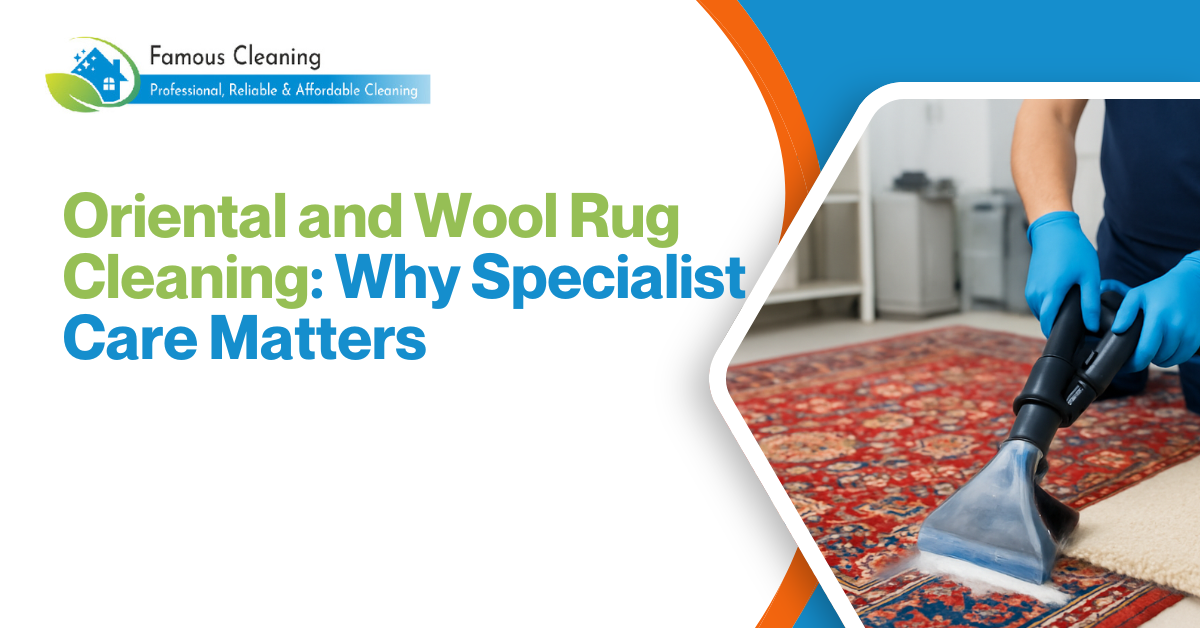
Oriental and Wool Rug Cleaning: why specialist care matters
14 January, 2026 | Famous Cleaning
Oriental and wool rug cleaning needs specialist care because these rugs can have natural fibres, woven foundations, fringes, unstable dyes and moisture-sensitive backing. A standard carpet cleaning method can damage some rugs if the cleaner does not check the material, dye stability, construction and condition first.
Oriental rugs are often hand-knotted or woven, although some are machine-made. Wool rugs are made from natural wool fibres, which respond differently to moisture, heat, chemicals and brushing compared with many synthetic carpets. For Adelaide homes and businesses, specialist rug cleaning helps reduce the risk of colour bleeding, shrinkage, browning, fibre distortion, odour and slow drying.
The IICRC S100 Standard recommends that area rugs be removed from the home or business and cleaned under controlled in-plant conditions where possible. If this is not practical, on-site rug cleaning should be done by a trained rug cleaning technician using methods suitable for the rug, which is the approach followed by Famous Cleaning to ensure safe and effective results.
What makes Oriental and wool rugs different?
Oriental and wool rugs are different from standard fitted carpets because they are usually removable, layered and more sensitive to cleaning method. They may also have fringes, woven patterns, natural fibres and dyes that require testing before wet cleaning.
A specialist rug cleaner should check:
- Fibre type
- Dye stability
- Rug construction
- Fringe condition
- Soil level
- Stain type
- Odour source
- Backing condition
- Previous cleaning damage
- Water sensitivity
- Drying requirements
This inspection should happen before cleaning starts. It helps decide whether the rug can be washed, extracted, low-moisture cleaned or needs a more controlled treatment.
Why standard carpet cleaning may not be suitable
Standard carpet cleaning is usually designed for fitted carpets installed inside a room. It often focuses on traffic lanes, stains and general soil removal. Oriental and wool rugs need a different approach because the cleaner must protect the rug’s fibres, dyes and structure.
A standard carpet cleaning method may cause issues if:
- The rug has unstable dyes
- The wool reacts poorly to high-pH products
- The rug is over-wet
- The backing holds moisture
- The fringe is scrubbed too aggressively
- The rug dries too slowly
- Soil remains trapped in the foundation
- Pet urine has affected dyes or backing
The WoolSafe Organisation’s maintenance guidance recommends pre-testing before wet cleaning and warns that over-wetting can lengthen drying time and may cause pile discolouration.
Key risks when Oriental and wool rugs are cleaned incorrectly
1. Colour bleeding
Colour bleeding occurs when dyes spread from one part of a rug to another during cleaning, often affecting borders, patterns, fringes, or lighter areas. The risk is higher in handmade or older rugs, especially those with dark red, blue, or black dyes. It is also more likely in rugs that have experienced previous water damage, pet urine contamination, or harsh chemical cleaning, as well as rugs with unknown dye stability. To prevent this, a specialist cleaner should always test the dyes before applying any moisture or cleaning solution.
2. Shrinkage and shape distortion
Wool rugs and woven rugs can shrink or distort if they absorb too much moisture or dry unevenly. Some rugs may develop curled edges, ripples, wavy sides or uneven corners.
Shrinkage and distortion can happen when:
- The rug is over-wet
- The backing is unstable
- Drying is too slow
- Heat is used incorrectly
- The rug is cleaned on an unsuitable surface
- The rug is not supported properly during drying
3. Browning or yellowing
Browning or yellowing happens when moisture brings residues or soil to the surface, or when a rug dries too slowly. It is more common in rugs with heavy soil, jute or cotton fibres, past over-wetting, or leftover cleaning residue. Proper professional cleaning reduces this risk by removing dry soil first and ensuring controlled drying.
4. Fibre damage
Wool fibres can be damaged by harsh chemicals, strong agitation, heat, or incorrect pH, and even aggressive brushing can distort the pile. According to WoolSafe guidance, brushing should be minimal and cleaning products should always be pre-tested. Damage may appear as fuzzing, texture changes, pile distortion, loss of softness, uneven appearance, matted areas, or weakened fringes. A specialist cleaner should always choose methods based on the rug’s fibre and condition.
5. Fringe damage
Many Oriental rugs have fringes that are part of the rug foundation, not just decoration. Strong chemicals, heavy brushing or pulling can damage them.
Fringe cleaning needs care because:
- Cotton fringe can weaken with age
- Wool fringe can felt or distort
- Some stains may not fully lift
- Bleaching can weaken fibres
- Aggressive brushing can cause breakage
The cleaner should explain what level of improvement is realistic before cleaning starts.
6. Odour returning after cleaning
Odour may return if the source is not treated correctly. Pet urine, dampness, smoke, food spills and storage odours can sit deeper in the rug foundation or backing.
What should specialist rug cleaning include?
Specialist rug cleaning should include inspection, testing, dry soil removal, suitable cleaning, controlled rinsing, controlled drying and final inspection.
A typical specialist process may include:
1. Pre-inspection
The cleaner checks the rug’s fibre, construction, age, condition, stains, odour and damage. This step helps identify risks before cleaning.
2. Dye stability testing
The cleaner tests whether dyes may bleed or transfer. This is important for Oriental rugs, wool rugs and rugs with strong colour contrast.
3. Dry soil removal
The cleaner removes dry soil before applying moisture. Rugs can hold dust, grit and fine soil deep in the foundation. If this soil is not removed first, wet cleaning may turn it into residue.
4. Stain and odour assessment
The cleaner checks whether stains are from food, drink, pet urine, oil, water damage or previous cleaning. Different stains need different treatment.
5. Suitable cleaning method
The method should match the rug. Options may include controlled washing, low-moisture cleaning, hand cleaning, spot treatment or careful extraction.
6. Rinsing and residue control
Cleaning residue should be controlled because residue can make fibres feel sticky and attract soil faster.
7. Controlled drying
The rug should be dried in conditions that reduce moisture-related risks. Slow drying can cause odour, browning, dye movement or backing issues.
8. Final grooming and inspection
The rug is checked for remaining stains, pile distortion, fringe condition and drying quality.
Signs your Oriental or wool rug needs specialist cleaning
Your rug may need specialist cleaning when soil, odour or stains remain after regular vacuuming.
Common signs include:
- Dust comes out when the rug is moved
- Colours look dull
- Traffic areas look darker
- Fringe looks grey or stained
- Pet odour remains
- The rug smells musty
- Food or drink stains are visible
- The rug feels sticky or stiff
- The backing has odour
- The rug has water marks
- The rug has not been professionally cleaned for years
How often should Oriental and wool rugs be cleaned?
Most Oriental and wool rugs need professional cleaning every 12 to 24 months under normal household use. Rugs in high-traffic areas, homes with pets or commercial spaces may need cleaning more often.
What you can do at home between professional cleans
Home care steps include:
- Vacuum regularly using suction-only or a suitable setting
- Avoid aggressive beater bars on delicate rugs
- Rotate rugs every few months to balance wear
- Use rug pads where suitable
- Keep rugs dry
- Blot spills immediately with a clean white cloth
- Do not scrub stains
- Keep rugs out of long-term direct sunlight where possible
- Clean under rugs when moving them
- Check for moth activity, dampness or odour
- Follow the care label if available
The Australian Government’s YourHome guidance says pet dander and dust mites are generally present in soft furnishings, including carpet, bedding and furniture. It recommends frequent vacuuming with a high-quality vacuum cleaner to reduce them.
What not to do with Oriental and wool rugs
Some DIY cleaning methods can cause permanent damage.
Avoid:
- Using bleach
- Using strong alkaline cleaners
- Scrubbing heavily
- Soaking the rug without proper drying
- Using a steam cleaner without inspection
- Applying stain remover without dye testing
- Drying the rug in poor ventilation
- Leaving the rug damp on timber flooring
- Rubbing pet urine stains
- Using coloured cloths for blotting
- Ignoring musty odour
- Rolling up a damp rug
The WoolSafe Organisation has a certification program for carpet and rug care products. Its product guidance states that certified products must meet performance and safety requirements before using the WoolSafe Certification Mark.
When is off-site rug cleaning better?
Off-site rug cleaning is often better when the rug needs controlled dust removal, dye testing, washing, rinsing and drying.
- The rug is wool, silk or handmade
- The rug has pet urine contamination
- The rug has unstable dyes
- The rug has fringe
- The rug has heavy dust in the foundation
- The rug has odour
- The rug is valuable or delicate
- The rug needs controlled drying
- The rug is too soiled for light on-site cleaning
When can on-site rug cleaning be suitable?
On-site rug cleaning may be suitable when the rug is stable, synthetic or too large to remove. It may also be selected for practical reasons such as access, timing or customer preference.
- Rug inspection
- Fibre checks
- Dye testing where needed
- Surface protection
- Suitable moisture control
- Safe product selection
- Controlled drying support
- Clear explanation of limitations
Questions to ask before booking specialist rug cleaning
Before booking Oriental or wool rug cleaning, ask questions that test the cleaner’s process.
- Will you inspect the rug before cleaning?
- Do you test for dye stability?
- Can you identify wool, silk, cotton or synthetic fibres?
- Do you remove dry soil before wet cleaning?
- How do you clean fringes?
- How do you treat pet urine or odour?
- Will the rug be cleaned on-site or off-site?
- How will the rug be dried?
- What products will you use on wool?
- What stains may not fully come out?
- Do you check for previous cleaning damage?
- Do you explain risks before cleaning?
Oriental and wool rug cleaning needs specialist care because these rugs can react badly to the wrong cleaning method. The main risks are colour bleeding, shrinkage, browning, fringe damage, fibre distortion, odour return and slow drying—issues that Famous Cleaning carefully manages with the right techniques.
A proper rug cleaning process starts with inspection and testing. It should include dry soil removal, suitable cleaning, residue control and controlled drying. For delicate, wool, handmade, dyed or valuable rugs, specialist cleaning is safer than standard carpet cleaning or heavy DIY methods.
FAQs about Oriental and wool rug cleaning
Can wool rugs be steam cleaned?
Some wool rugs can be cleaned with controlled hot water extraction, but not all wool rugs are suitable for steam cleaning. The rug should be inspected and tested first because over-wetting, heat, harsh chemicals or poor drying can cause damage.
Why do Oriental rugs need specialist cleaning?
Oriental rugs may have woven foundations, fringes, natural fibres and dyes that can bleed or distort. Specialist cleaning checks these risks before moisture or chemicals are applied.
How often should Oriental rugs be cleaned?
Most Oriental rugs need professional cleaning every 12 to 24 months under normal use. High-traffic rugs, rugs in homes with pets and commercial rugs may need more frequent cleaning.
Can pet urine be removed from wool rugs?
Pet urine can often be treated, but results depend on the rug fibre, dye stability, contamination level, stain age and whether the urine has reached the foundation or backing.
Is off-site rug cleaning better than on-site cleaning?
Off-site rug cleaning is often better for wool, handmade, dyed, fringed, odour-affected or heavily soiled rugs because it allows controlled dust removal, cleaning and drying.
What is the safest way to clean a spill on a wool rug?
Blot the spill with a clean white cloth. Do not scrub. Do not apply strong chemicals or bleach. Arrange professional cleaning if the stain remains or the rug is delicate.
Can wrong cleaning shrink a wool rug?
Yes. Wool rugs can shrink or distort if they are over-wet, dried poorly or cleaned with unsuitable methods. Controlled cleaning and drying reduce this risk.