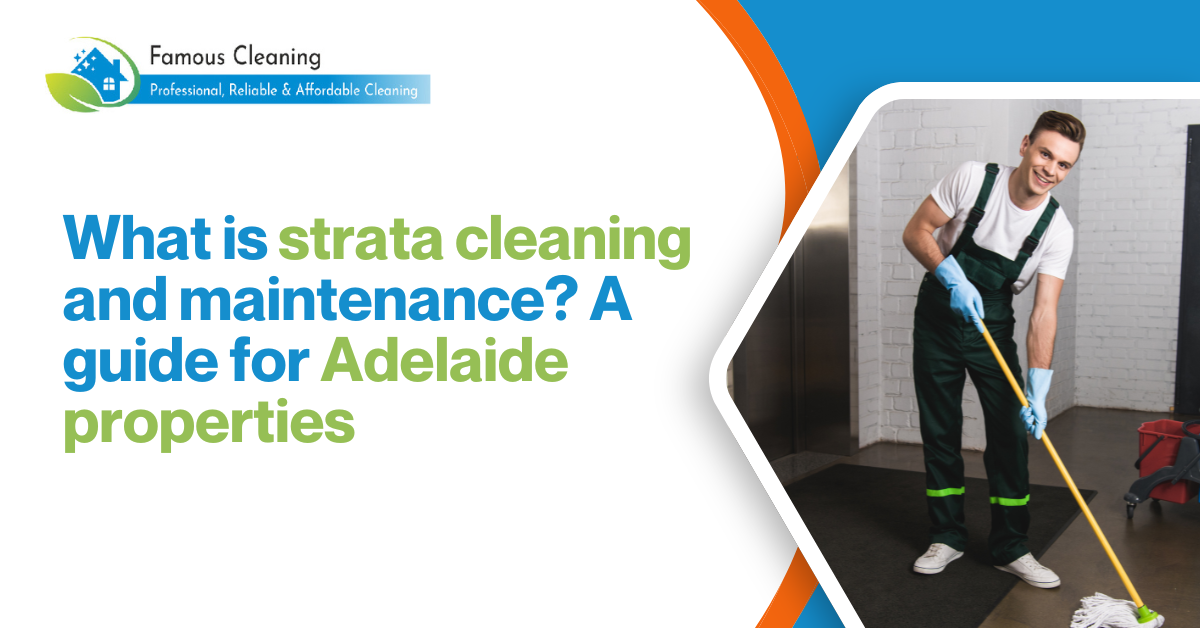
What is strata cleaning and maintenance? A guide for Adelaide properties
10 December, 2025 | Famous Cleaning
Strata cleaning and maintenance is the regular cleaning, upkeep and reporting of shared property areas in a strata or community-titled property. In Adelaide, this usually includes common areas such as entrances, stairwells, lifts, hallways, shared bathrooms, bin areas, car parks, paths, gardens and external access areas.
Strata cleaning is not the same as cleaning inside a private unit, apartment, office or shop. It focuses on shared areas used by residents, tenants, visitors, contractors and property managers.
In South Australia, a strata title is created when land is divided into at least two units plus common property. The Legal Services Commission of South Australia explains that common property is held by the strata corporation in trust for unit owners, and the corporation is responsible for maintaining common property. Individual unit owners are responsible for maintaining their own units.
What does strata cleaning mean?
Strata cleaning means cleaning the shared areas of a property that are managed by a strata corporation, community corporation, body corporate or property manager.
Common strata cleaning areas include:
- Building entrances
- Lobbies
- Hallways
- Stairwells
- Lifts
- Shared bathrooms
- Shared laundries
- Bin rooms
- Car parks
- Driveways
- Pathways
- Letterbox areas
- Balconies or shared outdoor areas, where included
- Windows and glass doors in common areas
- External hard surfaces
- Shared garden or courtyard areas, where included
What does strata maintenance mean?
Strata maintenance means keeping shared property areas functional, safe and usable. Cleaning is one part of maintenance, but maintenance can also include repairs, gardening, lighting checks, waste management, pest control coordination, gutter cleaning and reporting hazards.
For community title properties in South Australia, the state government explains that a community plan includes at least two lots and common property, with common property covering shared land such as driveways.
Strata maintenance typically involves a range of routine tasks to keep shared spaces safe, clean, and well-presented. This includes reporting issues such as broken lights, damaged doors, locks, or handrails, as well as identifying trip hazards and clearing blocked pathways.
Why strata cleaning matters for Adelaide properties
Strata cleaning matters because shared areas affect residents, tenants, visitors and property value. Poor cleaning can create complaints, odour, slip risks, pest issues and poor first impressions.
Safe Work Australia recommends cleaning schedules, adequate rubbish and recycling bins, drying floors after cleaning and keeping walkways clear to help manage slip, trip and fall risks.
For Adelaide strata properties, regular cleaning can help with:
- Cleaner entrances and hallways
- Safer common walkways
- Better bin room hygiene
- Reduced odour in shared areas
- Fewer complaints from residents
- Better presentation for tenants and visitors
- Earlier reporting of damage or hazards
- More consistent property management
Cleaning should not rely only on complaints. A written schedule helps prevent common areas from being missed.
You can also read: Benefits of Professional Strata Cleaning
What areas are included in strata cleaning?
The cleaning scope should list each shared area clearly. “Clean common areas” is too broad and can lead to missed tasks.
Entrances and lobbies
Entrances and lobbies receive the most foot traffic. They also collect dirt, rainwater, leaves and dust from outside.
- Vacuuming or mopping floors
- Cleaning entry mats
- Cleaning glass doors
- Removing fingerprints from touchpoints
- Cleaning door handles
- Dusting ledges and furniture
- Emptying bins, where present
- Removing cobwebs
- Reporting damaged mats, doors or locks
Hallways and corridors
Hallways connect residents, tenants and visitors to private units or commercial spaces.
- Vacuuming carpets
- Mopping hard floors
- Cleaning skirting boards
- Removing cobwebs
- Dusting ledges
- Cleaning light switches
- Cleaning marks from doors and walls where possible
- Removing loose rubbish
- Reporting stains, water leaks or trip hazards
Hallways should also remain clear. The South Australian Government notes that strata scheme articles can include not obstructing common areas.
Stairwells and handrails
Stairwells collect dust, grit, cobwebs and hand marks. They also need clear access.
- Sweeping or vacuuming stairs
- Mopping hard stair surfaces
- Cleaning landings
- Wiping handrails
- Cleaning door handles
- Removing cobwebs
- Checking for loose rubbish
- Reporting lighting faults or damaged handrails
Lifts and lift lobbies
Lifts are high-touch areas because residents and visitors use buttons, doors and handrails throughout the day.
Tasks may include:
- Cleaning lift buttons
- Cleaning lift doors
- Cleaning mirrors or glass
- Vacuuming or mopping lift floors
- Removing fingerprints
- Cleaning handrails
- Removing rubbish
- Reporting odour, spills or damage
Bin rooms and waste areas
Bin areas need regular cleaning because they can develop odour, spills and pest issues.
Tasks may include:
- Sweeping bin rooms
- Mopping or pressure cleaning floors where suitable
- Cleaning around bins
- Removing loose rubbish
- Reporting overflowing bins
- Reporting contamination in recycling bins
- Cleaning spills
- Checking for odour
- Reporting pest signs
Car parks and driveways
Car parks and driveways are shared access areas. They collect tyre marks, leaves, oil marks, litter and dust.
Tasks may include:
- Sweeping loose debris
- Removing litter
- Cleaning pedestrian paths
- Reporting oil spills
- Reporting broken lighting
- Reporting damaged wheel stops or line markings
- Pressure cleaning selected areas, where scheduled
- Clearing leaves from entry points
Shared bathrooms and laundries
Some apartment blocks, commercial strata properties and mixed-use properties have shared bathrooms or laundries.
Tasks may include:
- Cleaning toilets and basins
- Cleaning taps and handles
- Cleaning mirrors
- Emptying bins
- Replacing liners
- Mopping floors
- Cleaning benches
- Cleaning laundry sinks
- Reporting leaks, odour or blocked drains
External paths and common outdoor areas
External shared areas affect both safety and presentation.
Tasks may include:
- Sweeping paths
- Removing leaves and litter
- Cleaning entrance steps
- Removing cobwebs
- Cleaning outdoor seating, where included
- Reporting uneven paving
- Reporting drainage issues
- Pressure cleaning hard surfaces, where scheduled
- Reporting water pooling after rain
What should be included in a strata cleaning scope?
A strata cleaning scope should describe the work clearly enough that the cleaner, strata manager and committee have the same expectations.
- Property address
- Common areas included
- Areas excluded
- Cleaning frequency
- Cleaning day and time
- Bin room tasks
- Glass cleaning tasks
- Floor cleaning method
- Lift cleaning requirements
- Bathroom or laundry requirements
- External cleaning tasks
- Reporting process for damage or hazards
- After-hours access details
- Product or equipment requirements
- Periodic deep cleaning schedule
Common strata cleaning problems
Common problems include:
- Bin rooms not cleaned often enough
- Hallway carpets becoming stained
- Lifts showing fingerprints and odour
- Stairwells being missed
- Cobwebs in external areas
- Residents leaving items in common areas
- Cleaning complaints without photos or dates
- No written cleaning checklist
- No process for reporting hazards
- Deep cleaning not budgeted
- External areas ignored after storms or windy weather
Strata maintenance issues cleaners should report
Reportable issues include:
- Broken lights
- Damaged locks
- Loose handrails
- Cracked tiles
- Wet or slippery floors
- Blocked drains
- Water leaks
- Mould or damp smells
- Pest activity
- Overflowing bins
- Damaged doors
- Graffiti
- Trip hazards
- Abandoned items in common areas
- Repeated oil stains in car parks
Reporting does not replace professional maintenance, but it helps the strata manager act earlier.
How to choose a strata cleaning provider in Adelaide
Before choosing a strata cleaning provider, ask questions that test scope, communication and reliability.
Useful questions include:
- Do you clean residential and commercial strata properties?
- Will you work from a written checklist?
- Are bin rooms included?
- Are lifts and stairwells included?
- Is glass cleaning included?
- Do you provide periodic deep cleaning?
- How do you report maintenance issues?
- Can you provide before-and-after photos when needed?
- Do you have insurance?
- Can you clean outside peak resident times?
- How do you handle complaints or missed tasks?
- Can you adjust the schedule after inspections?
A strata cleaning provider should explain what is included, what is excluded and how issues are reported.
Strata cleaning checklist for Adelaide property managers
Use this checklist before approving or reviewing a cleaning schedule.
Common areas
- Are all entrances listed?
- Are hallways included?
- Are stairwells included?
- Are lifts included?
- Are shared bathrooms or laundries included?
- Are bin rooms included?
- Are car parks and driveways included?
- Are external paths included?
Frequency
- Are high-use areas cleaned more often?
- Are bin areas cleaned often enough?
- Are lifts cleaned frequently?
- Is external cleaning scheduled after seasonal build-up?
- Is deep cleaning planned?
- Is the frequency based on property use?
Safety and reporting
- Are spills reported?
- Are wet floor signs used?
- Are broken lights reported?
- Are trip hazards reported?
- Are blocked common areas reported?
- Are maintenance issues photographed where useful?
Communication
- Is there one contact person?
- Is there a written scope?
- Are complaints recorded with dates and photos?
- Are cleaners told about access rules?
- Are residents informed of cleaning times where needed?
- Is the checklist reviewed regularly?
Summary
Strata cleaning and maintenance covers the shared areas of a strata or community property. Cleaning includes tasks such as vacuuming, mopping, glass cleaning, bin room cleaning, lift cleaning and external area cleaning. Maintenance covers broader upkeep, reporting and repair coordination for common property.
For Adelaide properties, the practical starting point is a written scope—and Famous Cleaning helps bring this to life. List every common area, set the cleaning frequency, define what is excluded, include bin and lift cleaning where relevant, and create a simple reporting process for hazards or damage, ensuring consistent and reliable property care.
FAQs about strata cleaning and maintenance
What is strata cleaning?
Strata cleaning is the cleaning of shared areas in a strata or community-titled property. It usually includes entrances, hallways, stairwells, lifts, bin rooms, car parks, shared bathrooms and external common areas.
What is strata maintenance?
Strata maintenance is the upkeep of shared property areas. It may include cleaning, repairs, gardening, lighting checks, waste management, pressure cleaning and hazard reporting.
Who is responsible for common property in South Australian strata properties?
In South Australia, the strata corporation is responsible for maintaining common property, while individual unit owners maintain their own units.
How often should strata common areas be cleaned?
Small residential blocks may need weekly or fortnightly cleaning. Larger apartment buildings, mixed-use properties and commercial strata sites may need cleaning several times per week or daily in high-use areas.
Are bin rooms included in strata cleaning?
Bin rooms should usually be included because they can develop odour, spills, loose rubbish and pest issues. The frequency should match the number of residents or businesses using the bins.
Is strata cleaning the same as apartment cleaning?
No. Strata cleaning covers shared common areas. Apartment cleaning usually refers to cleaning inside a private apartment or unit.
Should strata cleaners report maintenance issues?
Yes. Cleaners should report visible issues such as broken lights, leaks, damaged flooring, blocked drains, trip hazards, graffiti, pest signs and overflowing bins. Repairs should be handled by the correct maintenance provider.